
At CMC Hospital Dubai, our team of US & UK Trained Breast Surgeons and Breast Radiologists are leading experts in the diagnosis and treatment of Gynecomastia via the latest techniques and technology. We provide customised packages and treatment plans to empower you with the appearance and confidence you desire.
Gynaecomastia
Gynaecomastia is the name given to the enlargement of the natural breast tissue in a man. It usually happens due to an imbalance of the hormones, testosterone and estrogen, but can be caused by certain medications and lifestyle factors. It is a benign (non-cancerous) condition.
Pseudogynaecomastia is an enlargement in the fatty (adipose) tissue and is mostly commonly associated with obesity.
How does Gynaecomastia present?
Gynaecomastia usually presents as a small lump behind the nipple. It may be on one or both sides. The lump may be easy to move and it can be tender to touch. It is important to note the male breast cancer can present with a lump behind or around the nipple, so it is important to see your Healthcare Provider to distinguish between them.
What are the causes of Gynaecomastia?
There are three phases of life when Gynaecomastia is most likely to be related to hormonal fluctuations: birth, puberty and late adulthood.
Some medical conditions may present with Gynaecomastia, so it is important to see your Healthcare Provider to rule out any treatable causes.
There are some well-known medications which cause Gynaecomastia. If you are taking any regular medications, check with your Healthcare Professional to see if one of these might be the cause.
How is Gynaecomastia diagnosed?
Your Healthcare Provider will take a full history and perform a clinical examination. Further tests such as breast ultrasound or mammogram may be recommended to establish the diagnosis. Blood tests may be required to diagnose additional medical conditions or hormonal imbalance.
What is the treatment of Gynaecomastia?
A lot of people do not need any treatment once a medical cause has been ruled out. Physiological causes at birth and puberty usually go away as hormones rebalance. You may need to switch medications or start treatment for an underling medical condition.
If you have an increase in the fatty tissue on the chest wall associated with obesity, this may improve with lifestyle changes aimed at reducing excess weight.
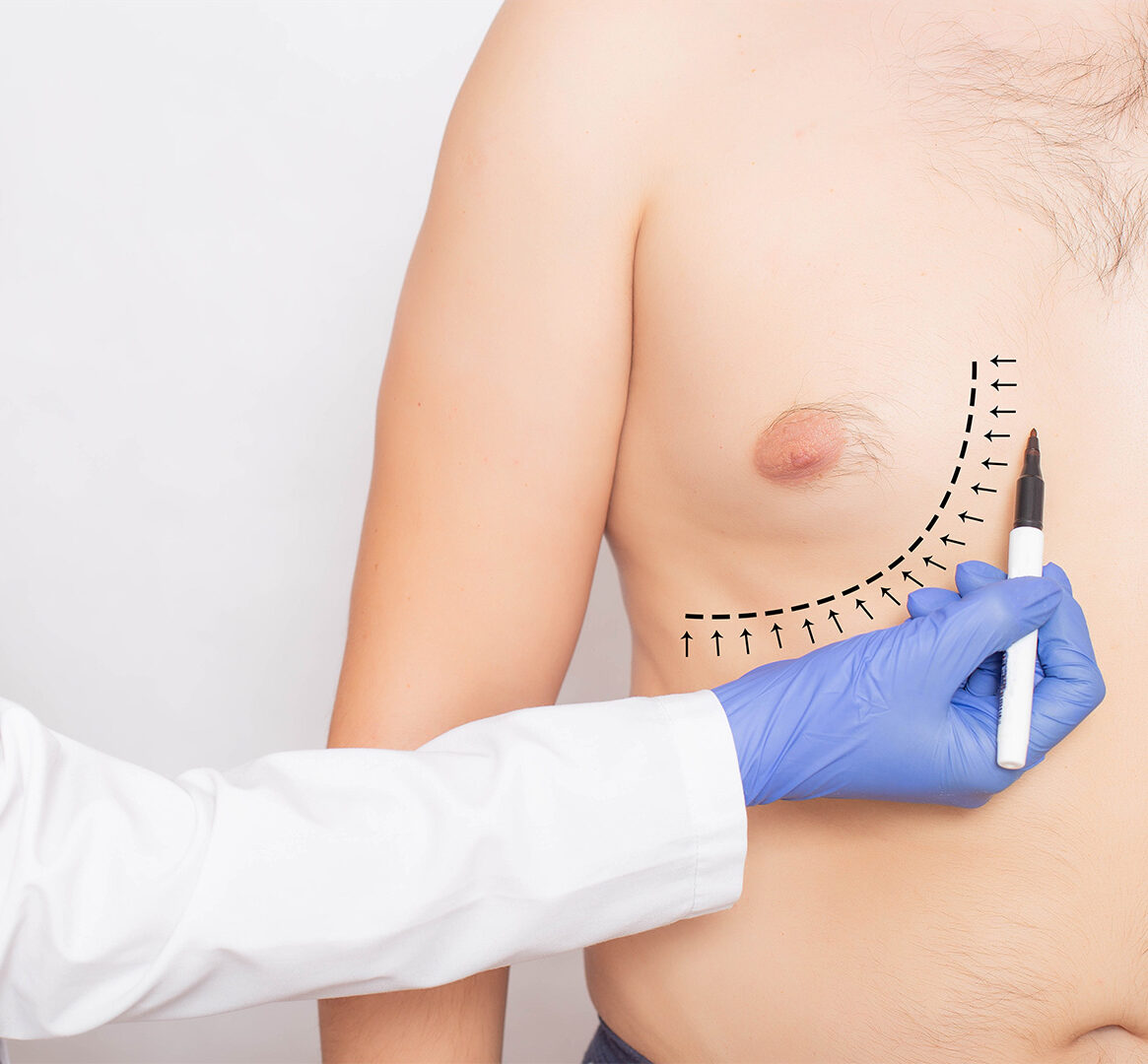
Surgery may be recommended for men with persistent or asymmetrical gynecomastia to remove the excess breast tissue. The most common surgical procedure for gynecomastia involves removing the breast tissue through a small incision, although some procedures may require the nipple and areola to be repositioned. In some cases, liposuction may be used to remove excess breast tissue.
