

- Non-surgical treatment of fibroids (via uterine fibroid embolization)
- Robotic myomectomy (using Da Vinci Robotic System)
- Laparoscopic myomectomy
- Hysteroscopy myomectomy
Our Advanced Fibroids Clinic at CMC Hospital Dubai is made up of a multidisciplinary team of US, UK & German Board Certified Gynecologists and Interventional Radiologists skilled in the latest robotic and minimally invasive uterine preserving techniques.
Fibroids are a benign tumor that grows on the surface or within the tissues of the uterus. The tumor size could be large and painful or asymptomatic.
Types of Fibroids
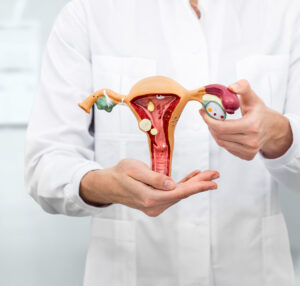
The type of fibroids varies depending on where it grows inside or outside of the uterus. Types of fibroids include:
- Submucosal fibroids: These tumors grow within the myometrium or the middle layer of the uterus muscles.
- Sub serosal fibroids: They grow on the serosa (the exterior part of the uterus). They can become significantly huge that one side of your womb may appear to be larger than the other.
- Pedunculated fibroids: Sub serosal tumors are capable of growing a stem, a thin foundation that serves as the tumor’s support. When this happens, they are called pedunculated fibroids.
- Intramural fibroids: They develop within the muscles of the uterine wall and have the potential to grow further and expand the womb.
Fibroids Risk Factors
Some of the risk factors associated with the development of fibroids include:
- An age of 30 years or older
- A high body mass index
- Pregnancy
- A genetic history of fibroids
Symptoms of Fibroids
Common symptoms of fibroids include:
- More cramping during the menstruation
- A feeling that the lower abdomen is full or pressurized
- Pain within the pelvis or lower back
- Higher urination frequency
- Enlargement/swelling of the lower section of the abdomen
- Significant bleeding in between or during menstruation
Fibroids Diagnosis
Fibroids are diagnosed through:
- Pelvic MRI: This detailed imaging examination gives images of the uterus, ovaries, and other pelvic organs.
- Ultrasound: An ultrasound projects an image of the uterus on a screen using high-frequency sound waves. Since the ultrasound wand is placed inside the vagina during a transvaginal ultrasound, it is closer to the uterus and may produce clearer images.
Treatment of Fibroids
Fibroids can be treated through:
Medication: Drugs to control hormone levels may be used to shrink the fibroids. This will stop menstruation and reduce the size of the fibroids.
Surgery: Surgery may be used to remove particularly big or numerous growths (myomectomy). CMC provides both minimally invasive laparoscopic and robotic myomectomy procedures
Non-surgical treatment – Uterine Fibroid Embolization. This unique procedure uses a catheter that is maneuvered into uterine artery and uses a technique to shrink the fibroids.

