
This procedure can help to reduce sagging skin, puffiness, and wrinkles around the eyes, resulting in a more youthful and refreshed appearance. It involves removing or repositioning fat and tightening the skin around the eyelids.
However, it can also be used for medical purposes in some cases. Here are some of the medical uses of blepharoplasty:
- Vision Improvement
- Correction of Ptosis
- Treatment of Entropion or Ectropion
- Treatment of Eye Tumors
How is Blepharoplasty Performed
Blepharoplasty can be performed under local or general anesthesia, depending on the extent of the surgery and the patient’s preferences.
The specific technique used will depend on the patient’s individual needs and goals but in general, the procedure involves the following steps:
- Anesthesia: Blepharoplasty is usually performed under local anesthesia with sedation or general anesthesia, depending on the extent of the surgery and the patient’s preference.
- Incisions: Incisions are made in the natural creases of the eyelids to minimize visible scarring. For upper eyelid surgery, the incision is made in the crease of the eyelid. For lower eyelid surgery, the incision may be made just below the eyelashes or inside the lower eyelid.
- Tissue Removal: The surgeon will remove excess skin, muscle, and/or fat from the eyelids as needed to achieve the desired results. This may involve removing or repositioning fat pads under the eyes or trimming excess skin and muscle in the upper eyelids.
- Closure: Once the tissue has been removed, the incisions are closed with fine sutures. The sutures will be removed after a few days, and any bruising or swelling will gradually subside over the next several weeks.
In some cases, additional procedures may be performed in conjunction with blepharoplasty to achieve the desired results, such as a brow lift or laser resurfacing.
Recovery time for blepharoplasty varies, but most patients can expect some swelling, bruising, and discomfort around the eyes for a few days to a week after the procedure.
Blepharoplasty Surgery for Puffy Eyes in Dubai
Who Would Benefit from a Blepharoplasty
Blepharoplasty, or eyelid surgery, is typically recommended for individuals who are bothered by the appearance of their eyelids and who are in generally good health.
Some common reasons why people may choose to undergo blepharoplasty include:
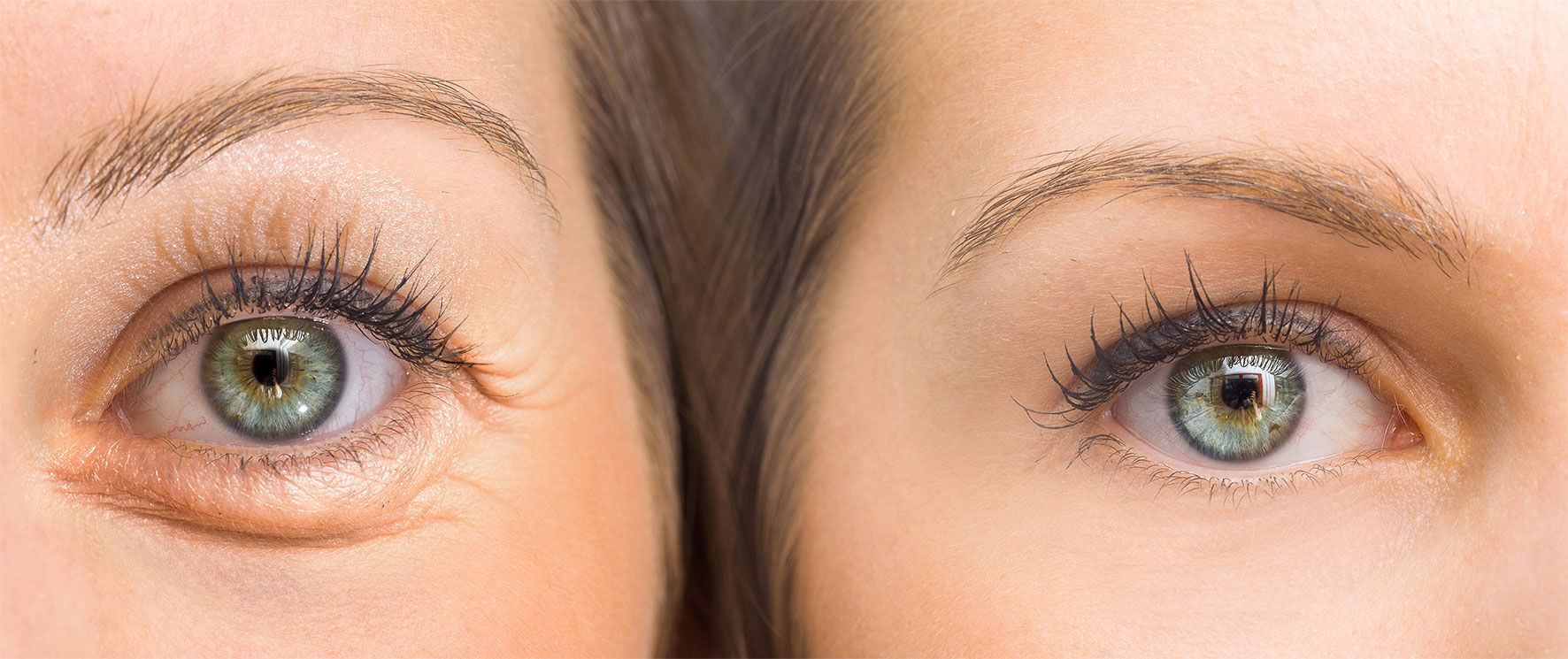
- Excess skin and sagging in the upper eyelids, which can create a “hooded” appearance and make the eyes look tired or older than they actually are
- Puffiness and bags under the eyes, which can be caused by excess fat or fluid accumulation in the lower eyelids
- Fine lines, wrinkles, and creases around the eyes, which can make the face look older and more tired
- Vision problems caused by sagging skin or excess fat in the upper eyelids, which can obstruct the field of vision and make daily activities more difficult
- Uneven eyelids, which can be caused by genetics or aging and can create an asymmetrical or lopsided appearance
It’s important to note that while blepharoplasty can help to improve the appearance of the eyelids, it may not be appropriate for everyone.
Individuals with certain medical conditions or eye problems, such as dry eye or glaucoma, may not be good candidates for the surgery.
Is Blepharoplasty Safe and What are the Risks
Overall, blepharoplasty is a safe and effective cosmetic surgery option for those looking to improve the appearance of their eyelids.
Like any surgical procedure, blepharoplasty does carry some risks and potential complications. However, in the hands of an experienced and qualified surgeon, the procedure is generally safe and effective.
Some potential risks and complications of blepharoplasty include:
Bleeding or Hematoma Formation: Although rare, bleeding can occur during or after surgery and may require additional treatment or surgery.
Infection: Infection is a rare but serious complication that can occur after any surgery.
Scarring: Although incisions for blepharoplasty are typically made in areas where scarring will be hidden, scarring can still occur and may be visible.
Dry Eyes: Some patients may experience temporary or permanent dryness in the eyes after surgery.
Vision Vhanges: In rare cases, changes in vision or double vision can occur after blepharoplasty.
Anesthesia Risks: General anesthesia carries some risks, including allergic reactions, respiratory problems, and anesthesia awareness.
Asymmetry: While blepharoplasty is designed to create a more symmetrical appearance, it is possible for some asymmetry to occur.
Overall, the risks and complications of blepharoplasty are relatively low, especially when performed by our experienced and qualified surgeons.